
Traditional Music Outreach Programme
for Public Primary Schools of Ouagadougou
Bringing traditional music to the children
of Ouagadougou, Burkina Faso.
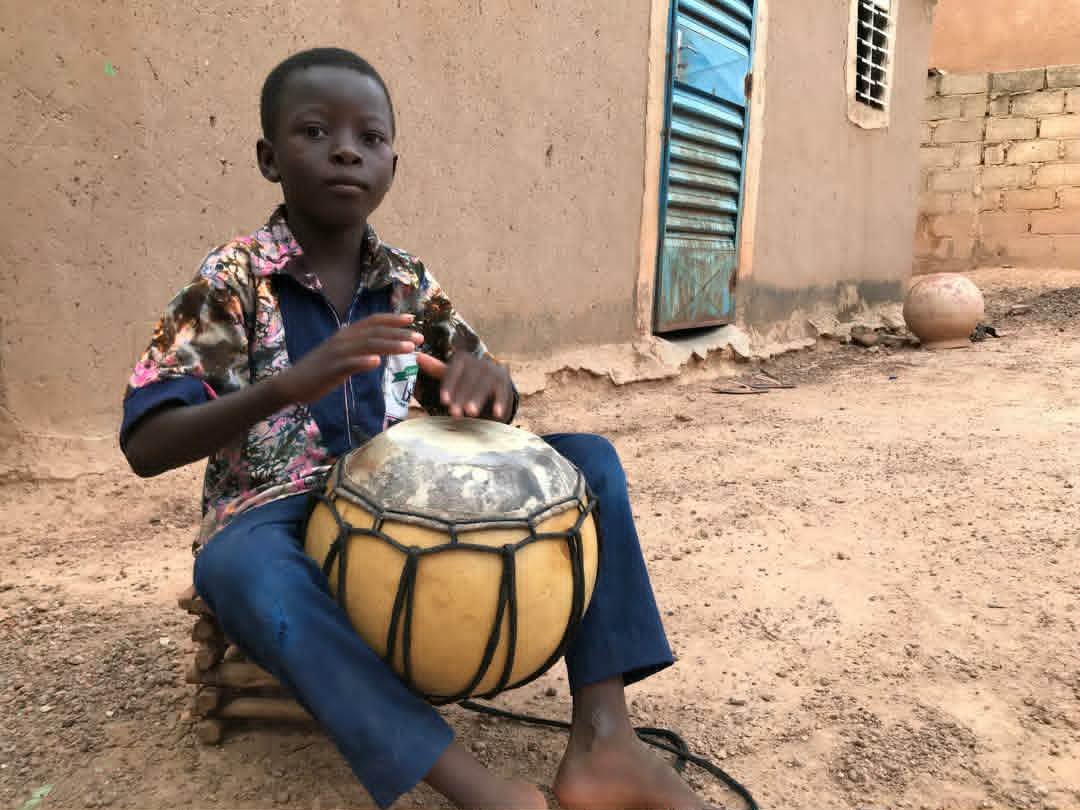
We are working in Ouagadougou, the capital of Burkina Faso in West Africa, alongside local musicians, on a single undertaking. Inside the schools, the country's own traditional music is taught to the children by those who carry it.
Why Burkina Faso, why now
The traditional music of West Africa has been carried for centuries by a people called the griots. Their music has not been written down, nor set into notation. It has passed from one person to the next, by voice and by hand.
That line of transmission is now under strain. The shrinking of community ritual, the inflow of commercial music, the difficulty of obtaining the plants from which instruments are made, the rising drive among the young toward schooling — these have combined, until griots find themselves directing their own children away from the music and toward formal education and other occupations. The ground on which the tradition rests has begun to give way, generation by generation.
FT Music Office, working through the local association ADEC/BF-J (Association for the Development of Cultural Exchange between Burkina Faso and Japan), put forward a proposal: teach the traditional music inside the schools themselves. The griot musicians of Ouagadougou, and the municipal authorities of the city, agreed with the proposal from its planning stage.
What we actually do
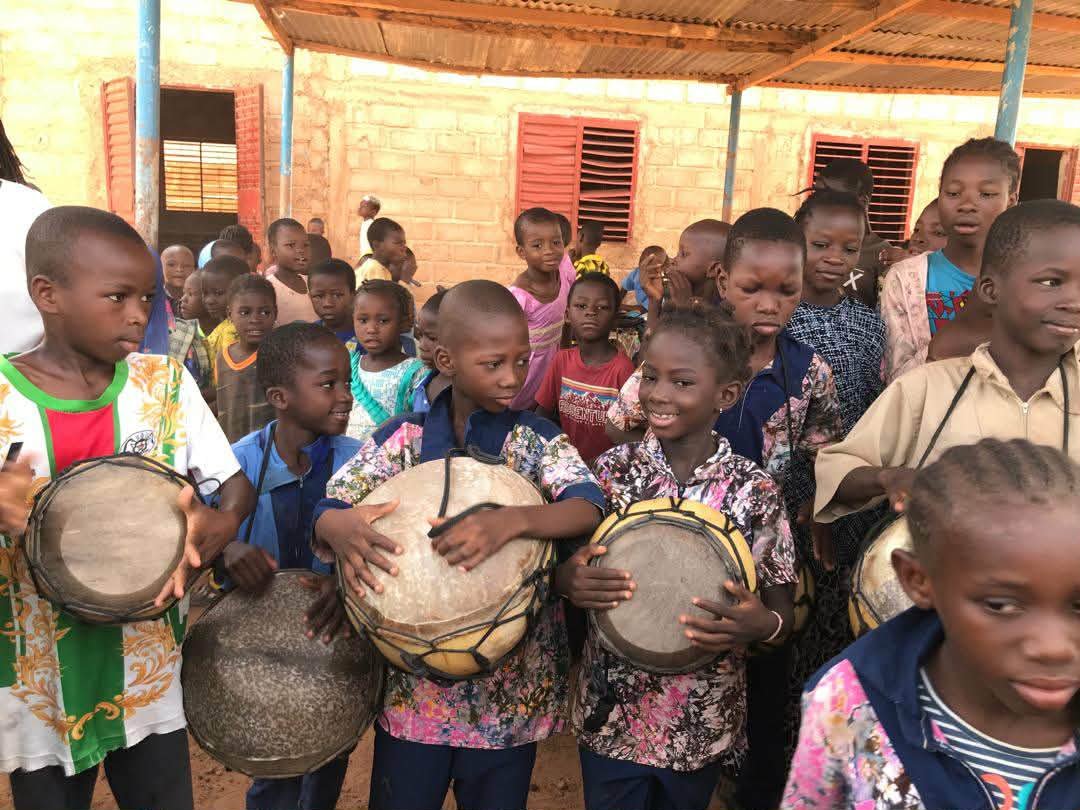
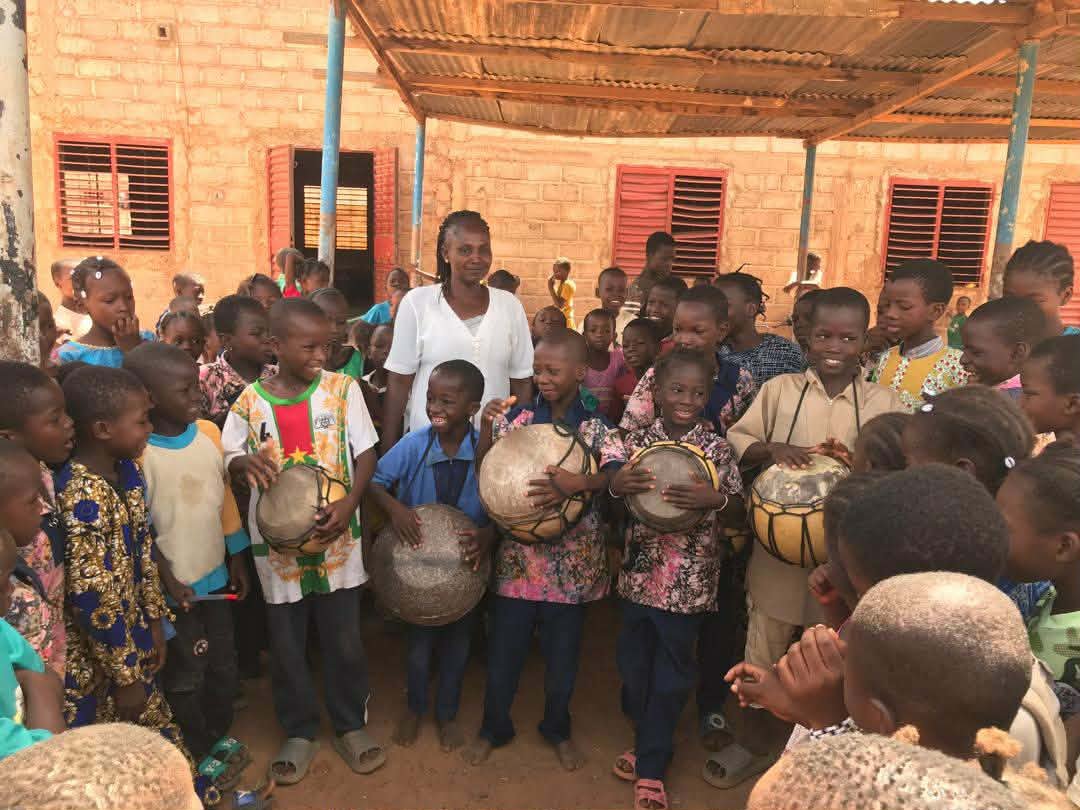
Traditional music teachers — griots — are placed into the public primary schools of Ouagadougou, and teach the children directly. Lessons are held twice a week, sixty to ninety minutes each, in groups of six, so that each child can be taught according to their own aptitude.
Six instruments are used: djembe, bendre (drum), tama (talking drum), kanya (a small metal instrument), maracas, and balafon (wooden xylophone). All are made by the griots themselves.
In time, the instruments will be given to the schools, so that they remain there after the lessons end — used not only in class but at school events, becoming part of the educational life of the school. Lessons end. Instruments stay. The children can keep returning to them. One instrument is the beginning of one stretch of time.
A project carried by three parties
The project is carried by three parties — the Japanese side, the Burkina Faso side, and the municipal authorities — each holding its own share. It is not built on one party bestowing something upon another. Each is responsible for its own part.
Office LLC
Authorities
Support the Project
Would you help us build the instruments?
In this project, support begins with a single instrument. The funds you give become, directly, the instruments used on the ground. If you wish, your name will be engraved on the instrument before it is delivered to the school. That instrument will be the one the children play with from then on.




by the player. One drum.Engraving of your name available

with West Africa. One drum.Engraving of your name available

with wooden keys. One instrument.Engraving of your name available
Engraving of the supporter's name is offered, as our thanks, for bendre, tama, djembe, and balafon. After payment, we will be in touch by email with the details.
All supporters will receive, by email, an activity report from the field together with photographs of the instrument.
The amount covers, in addition to the local cost of the instrument, operating costs, the cost of international transfer, and payment-processing fees. Amounts may vary slightly in the future, depending on exchange rates.
Payments are processed via QR code or the Support → link, which take you to PayPal's secure checkout page. A PayPal account is not required; credit cards are accepted.
For Corporate Partners
For companies, there are also five corporate sponsorship plans (from ¥300,000 up to ¥20 million per year).
The full proposal — including aim, budget, and operating structure — is available on the corporate page.
The path so far
Burkina Faso National Day at Expo 2025, Osaka–Kansai
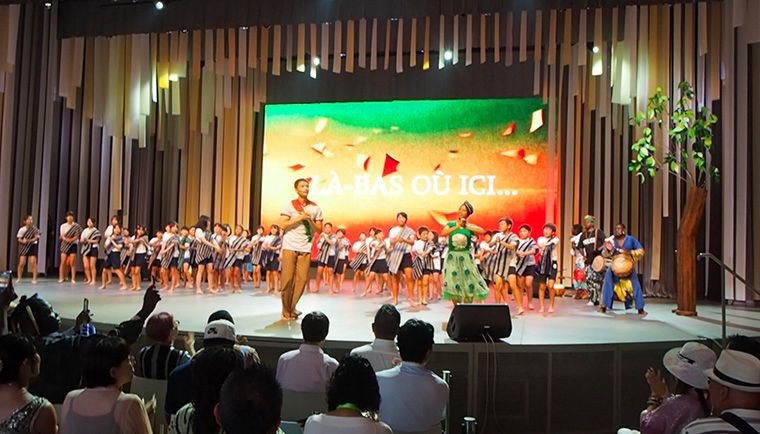
On Burkina Faso National Day at Expo 2025, we presented, as our own programme, the opera "LÀ-BAS OU ICI..." — composed by Keiko Fujiie in collaboration with musicians from Burkina Faso. Under the Cabinet Secretariat's International Expo Exchange Programme, Burkina Faso entered into a partnership with the city of Kashihara in Nara Prefecture, and some seventy pupils of Kashihara Municipal Kanahashi Primary School took part as guest performers.
Kashihara City Commission — a forerunner of this project
Following the Expo performance, on commission from the city of Kashihara, musicians invited from Burkina Faso gave teaching and provided new compositions for the fifth-year pupils at Kanahashi Primary School. The children took part in the "Kashihara–Takaichi Children's Concert", and the instruments used during their stay were given to the school at the close. Japanese children were able to touch West African instruments directly.
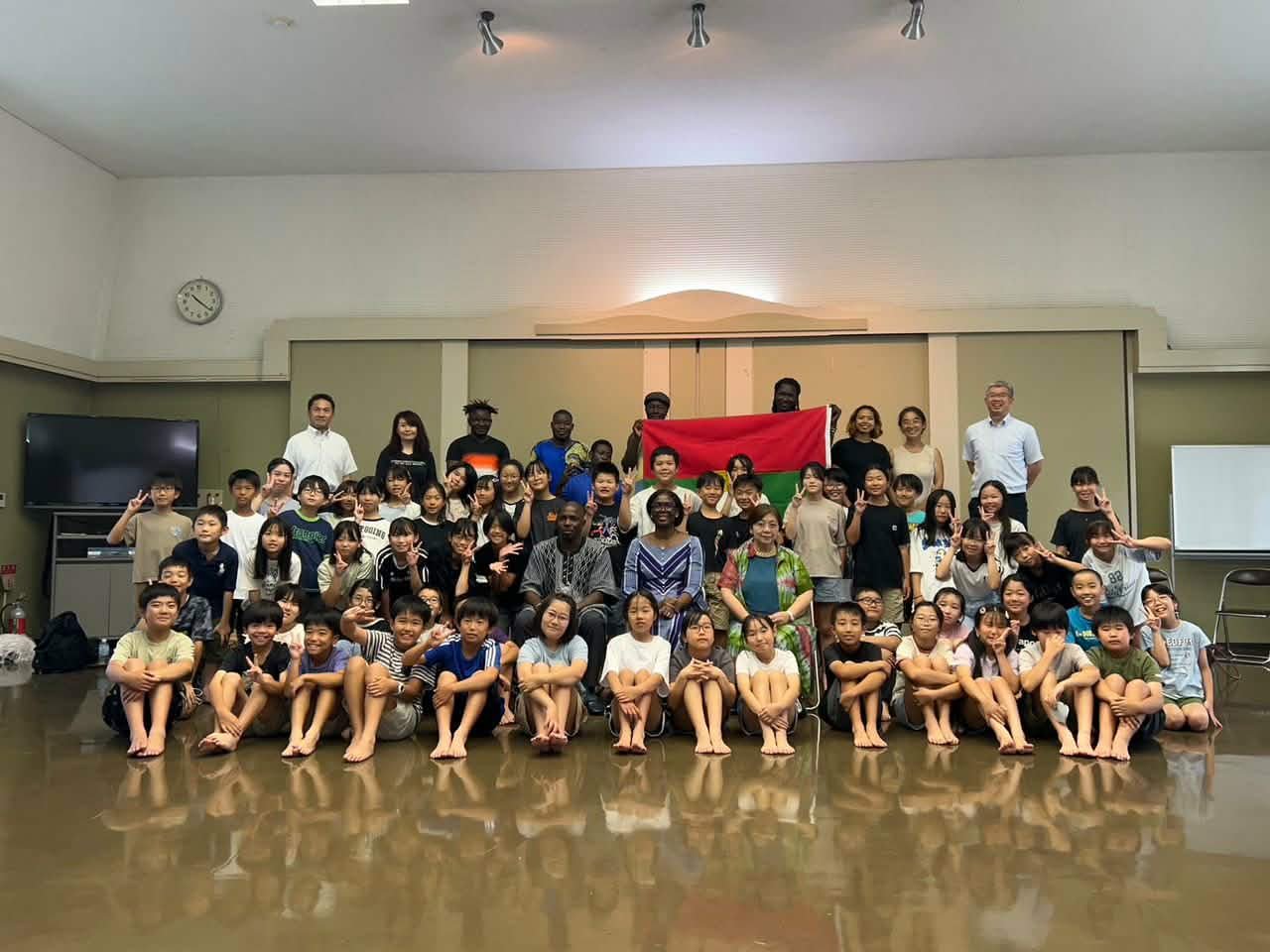
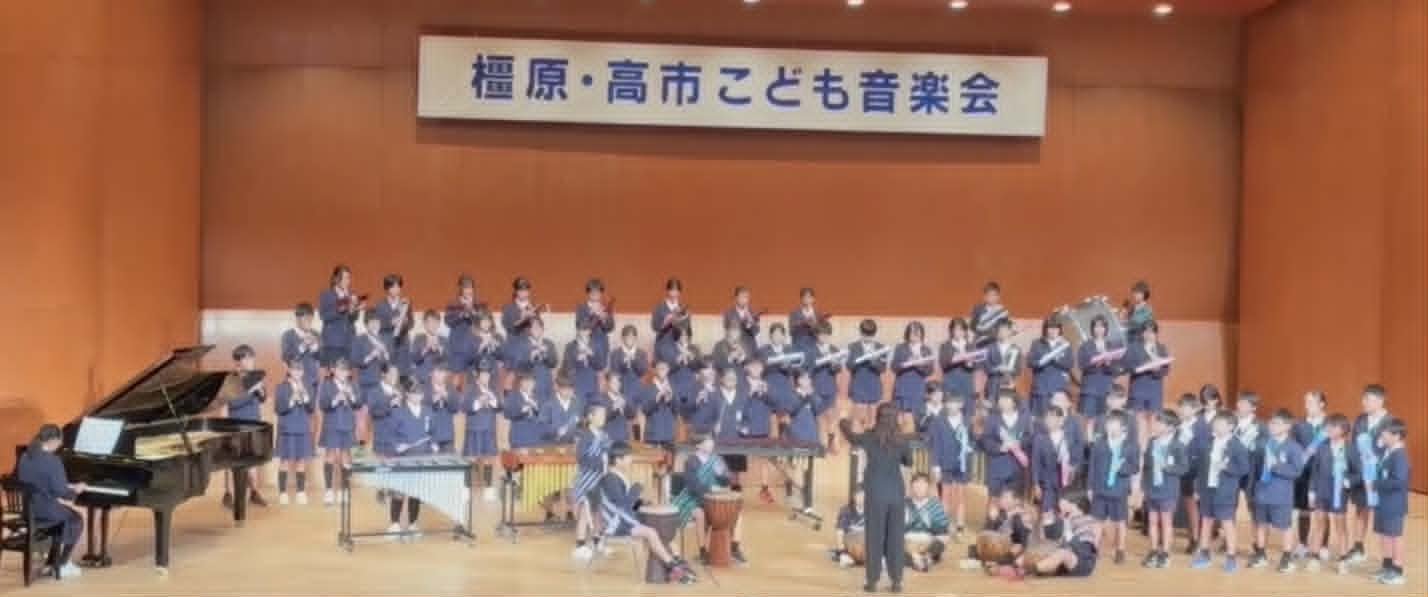
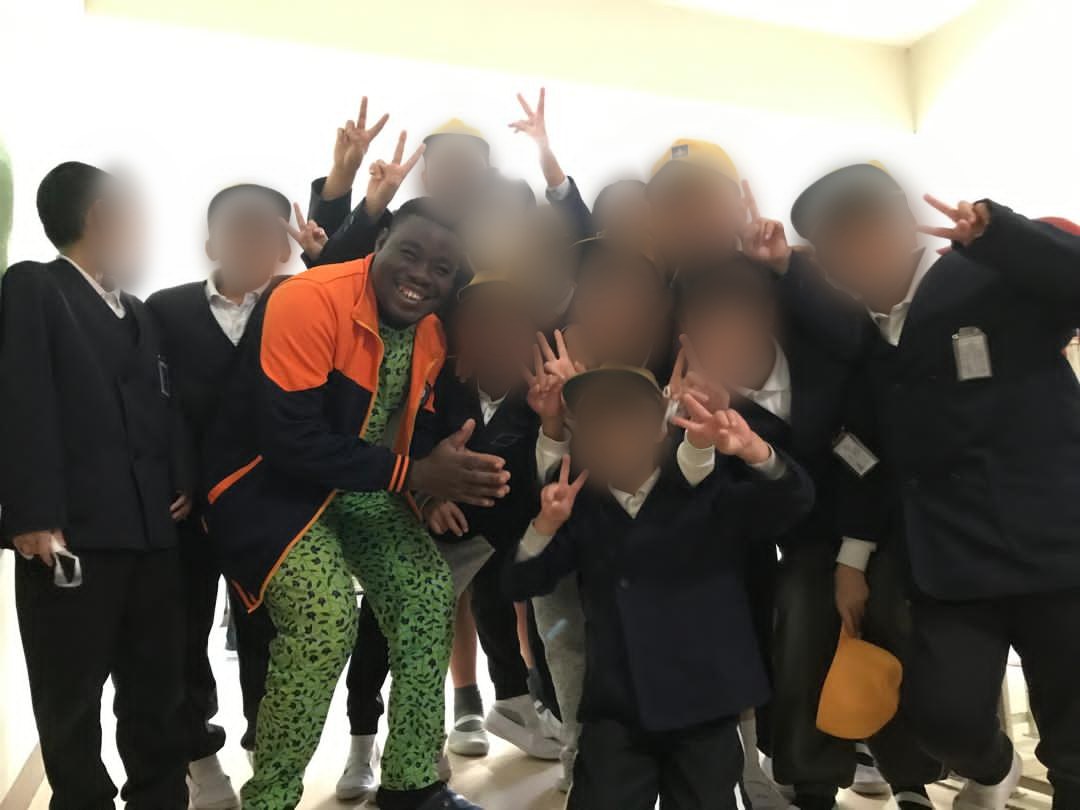
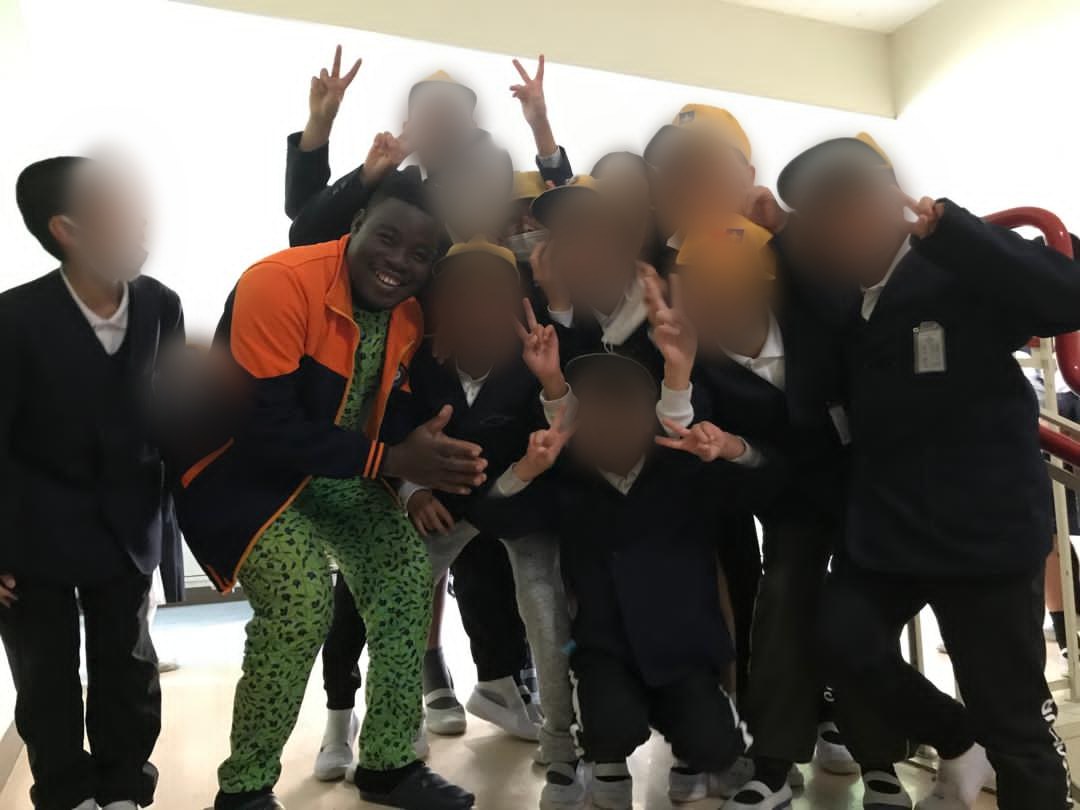
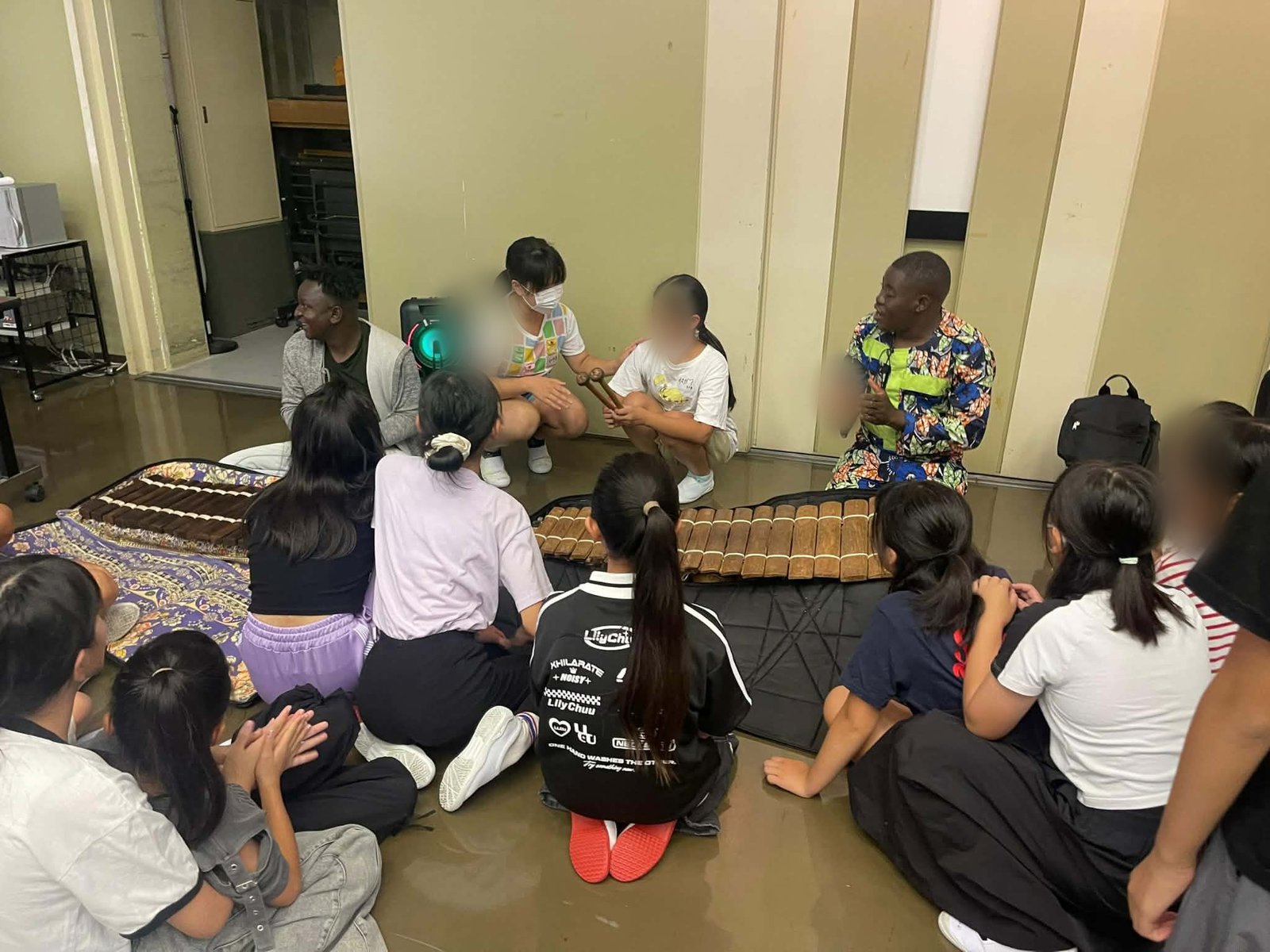
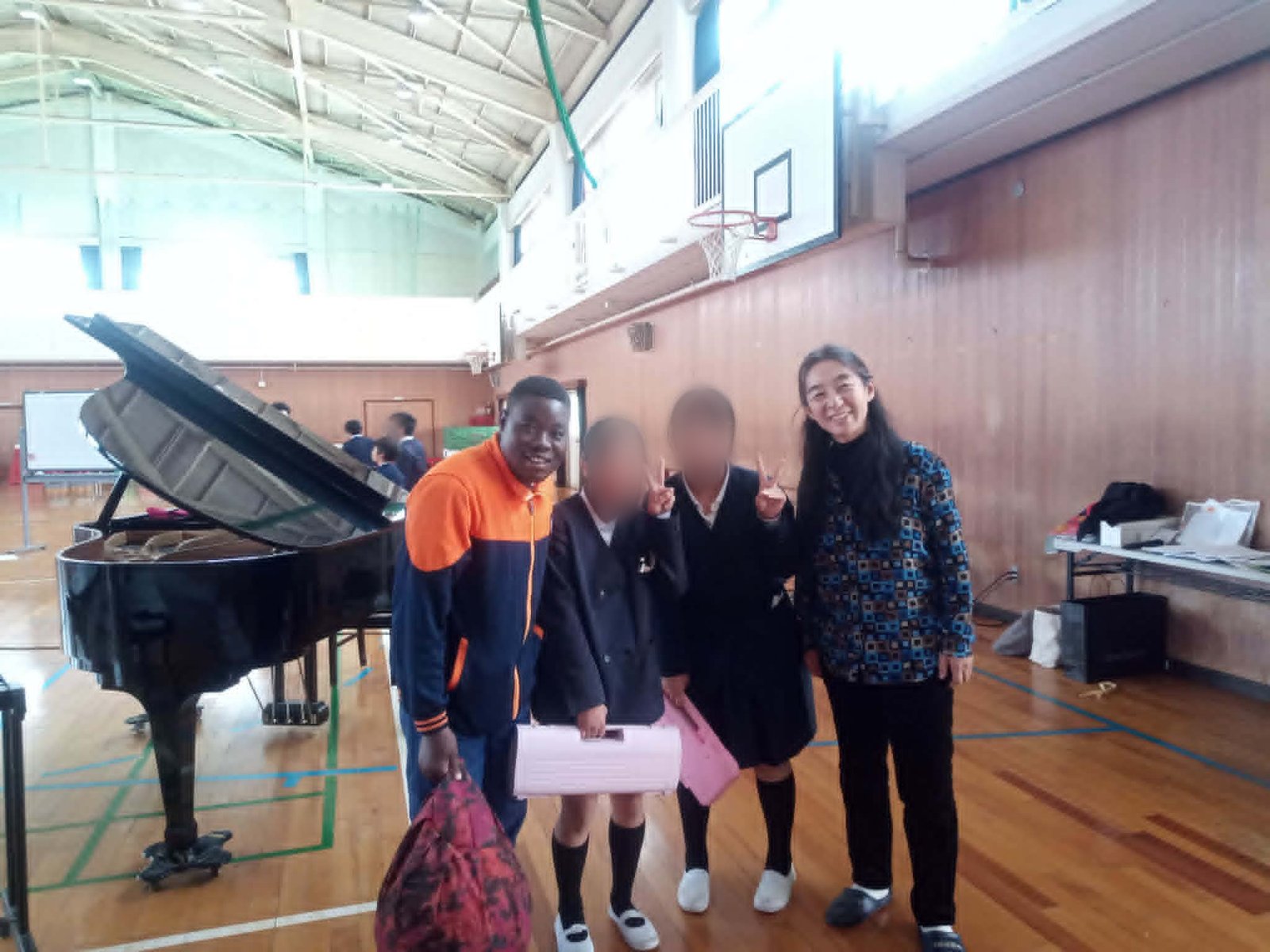
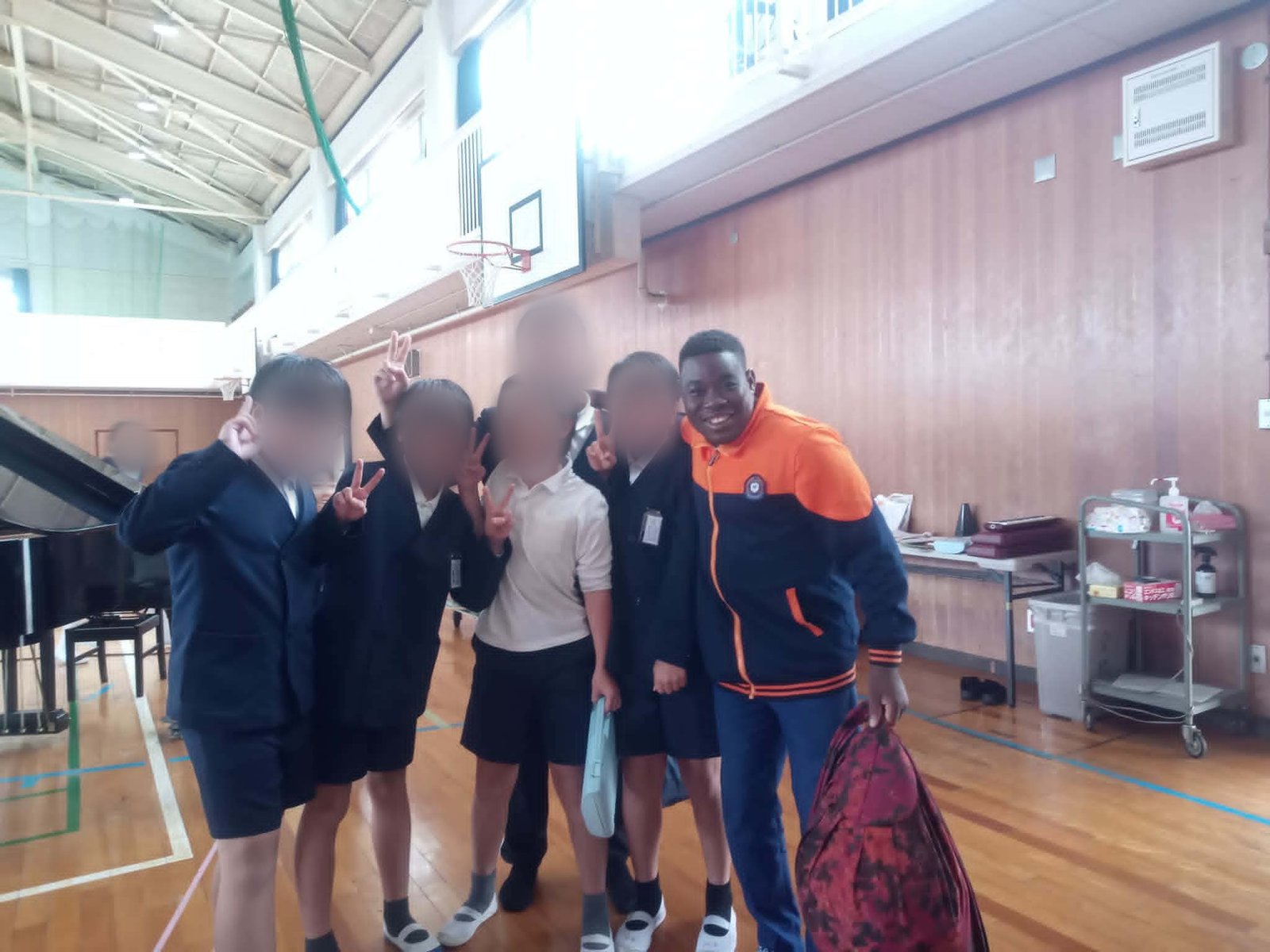
The pupils' faces have been partly processed, out of respect for the privacy of the children and their families.
ADEC/BF-J established; pilot phase begins
ADEC/BF-J — the Association for the Development of Cultural Exchange between Burkina Faso and Japan — was established on the ground, to continue and to develop cultural exchange in cooperation with the Burkinabe government. In May 2026, the first stage of the pilot phase (three months) begins in four public primary schools of Bissighin, in the city's 8th district. A second stage (three months) follows, and from there, the project will extend by stages across Ouagadougou.
This is not aid. It is one culture meeting another.
Burkina Faso, at present, is a country setting out to take back its own culture, and its own way of seeing. There is something in that which resonates with what Japan once worked through — the effort to learn from outside without losing the self.
This project is not structured as one party helping another. By delivering instruments into the hands of the children, it is an attempt to lay one small support beneath both cultures, so that each may keep sounding in its own place.
The project is not tied to the African policy of the Japanese government. It is precisely for that reason that we hope to build, beneath the line of governments, a relationship in which people and cultures meet directly — one we intend to carry on for a long time.